

B2B Marketing decision makers hit a wall in 2026: scaling personalized content without killing quality or authenticity. Across the market, artificial intelligence increasingly acts as a multiplier tool, not the dreaded replacement many teams feared.
This research-backed analysis explores how AI adoption patterns among marketing leaders signal enhanced Human Creativity, not its death - and what this shift means for performance-driven marketing strategies across the DACH region.
Definition: AI Generated Creative B2B Advertising
AI generated creative B2B advertising uses artificial intelligence systems to produce, optimize, and personalize marketing content at scale while maintaining brand voice and strategic messaging. This includes automated copy generation, dynamic creative optimization, personalized ad sequences, and data-driven content variations tailored to specific buyer personas and decision-making stages.
Market Validation: Data Drives AI Marketing Adoption
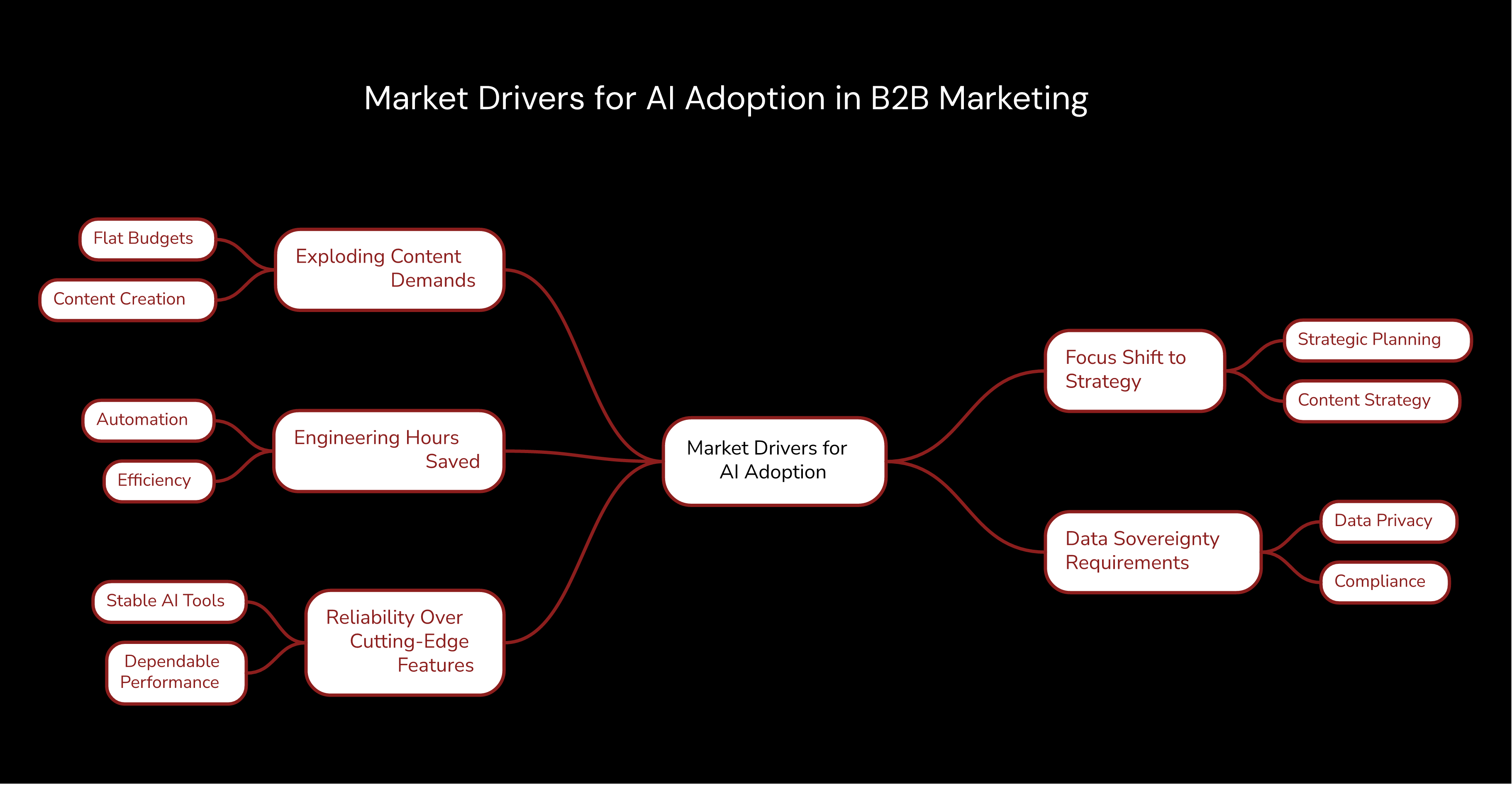
The push toward AI-powered creative processes reflects real market pressures, not tech hype. B2B marketing teams face exploding content demands while budgets stay flat. Marketing Decision Makers now judge AI tools by concrete performance metrics, not flashy feature lists.
"The real cost of automation isn't the platform - it's the engineering hours saved when your team can focus on strategy instead of production."
In our n8n pipelines, reliability beats complexity every time. DACH enterprises consistently value data sovereignty and predictable automation workflows over cutting-edge features that introduce operational risk. This market preference drives our technical choices when building AI Marketing automation systems.
The draw is faster time-to-market and better content performance tracking. Marketing teams now produce personalized campaigns that previously required weeks of manual work. The competitive edge emerges from speed and consistency rather than revolutionary creative breakthroughs.
Personalization at Scale: Technical Implementation Beyond Templates
Effective AI Marketing Automation demands moving past template-based approaches toward dynamic content generation systems. The technical architecture must handle multiple data sources while maintaining brand consistency across all touchpoints and communication channels.
Modern personalization engines process buyer behavior data, company firmographics, and engagement history to create contextually relevant messaging. This goes way beyond inserting company names into email templates - it involves analyzing communication patterns and optimizing message timing, format, and content depth for specific decision-maker roles.
Voice-Activated Advertising Integration
Voice technologies become essential to B2B marketing automation workflows. Voice-activated systems trigger campaign updates, generate content briefs, and provide real-time performance summaries for marketing teams juggling multiple concurrent campaigns.
The GDPR ? implications of voice data processing require careful technical implementation. AI systems must process voice commands locally or through EU-hosted infrastructure to maintain compliance with data protection ? regulations while delivering the operational benefits marketing teams need.
DACH Market Considerations: Compliance and Data Sovereignty
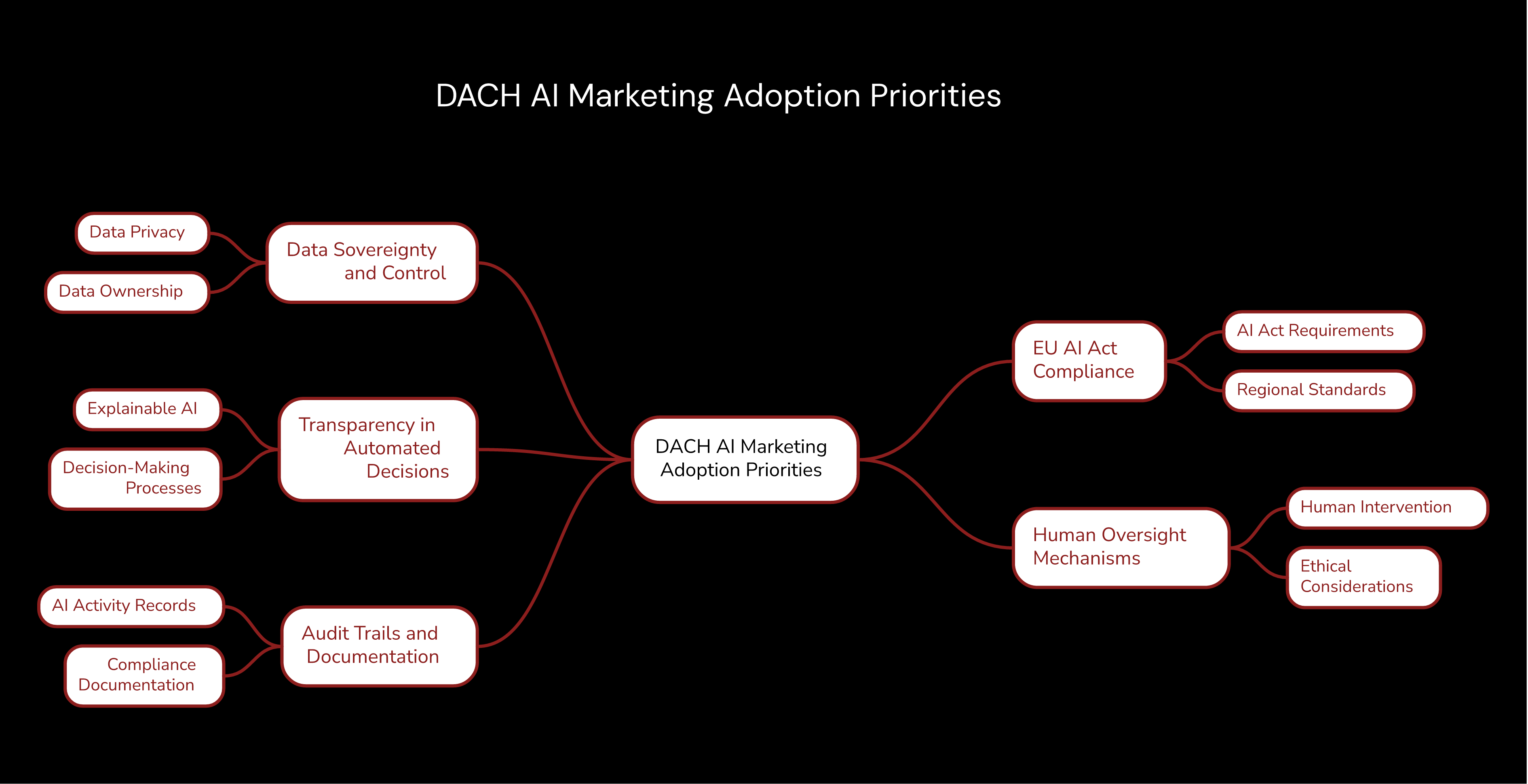
DACH Enterprises approach AI marketing adoption with data sovereignty as their top concern. Unlike global enterprises that may prioritize feature breadth, German, Austrian, and Swiss companies focus on regulatory compliance and data control when selecting AI marketing platforms.
The EU AI Act introduces fresh considerations for automated marketing decisions. AI systems that influence consumer behavior may require transparency measures and human oversight mechanisms. Marketing automation workflows must document decision processes and provide audit trails for Regulatory Compliance.
We deliberately architect our automation pipelines to run on client-controlled infrastructure rather than external SaaS platforms. This approach addresses both GDPR requirements and the practical business need for predictable, owned marketing technology stacks that won't vanish due to vendor decisions or service changes.
Cloud Solutions vs. Owned Infrastructure
The choice between cloud-based AI marketing platforms and self-hosted solutions represents a fundamental strategic decision for DACH enterprises. Cloud solutions offer faster implementation but introduce vendor dependencies and data sovereignty concerns that many European companies find unacceptable.
Self-hosted AI marketing automation requires higher initial engineering investment but provides long-term operational control and compliance certainty. This trade-off particularly affects smaller enterprises that need AI capabilities but lack dedicated technical teams to manage complex infrastructure.
Implementation Challenges: Beyond the Technology
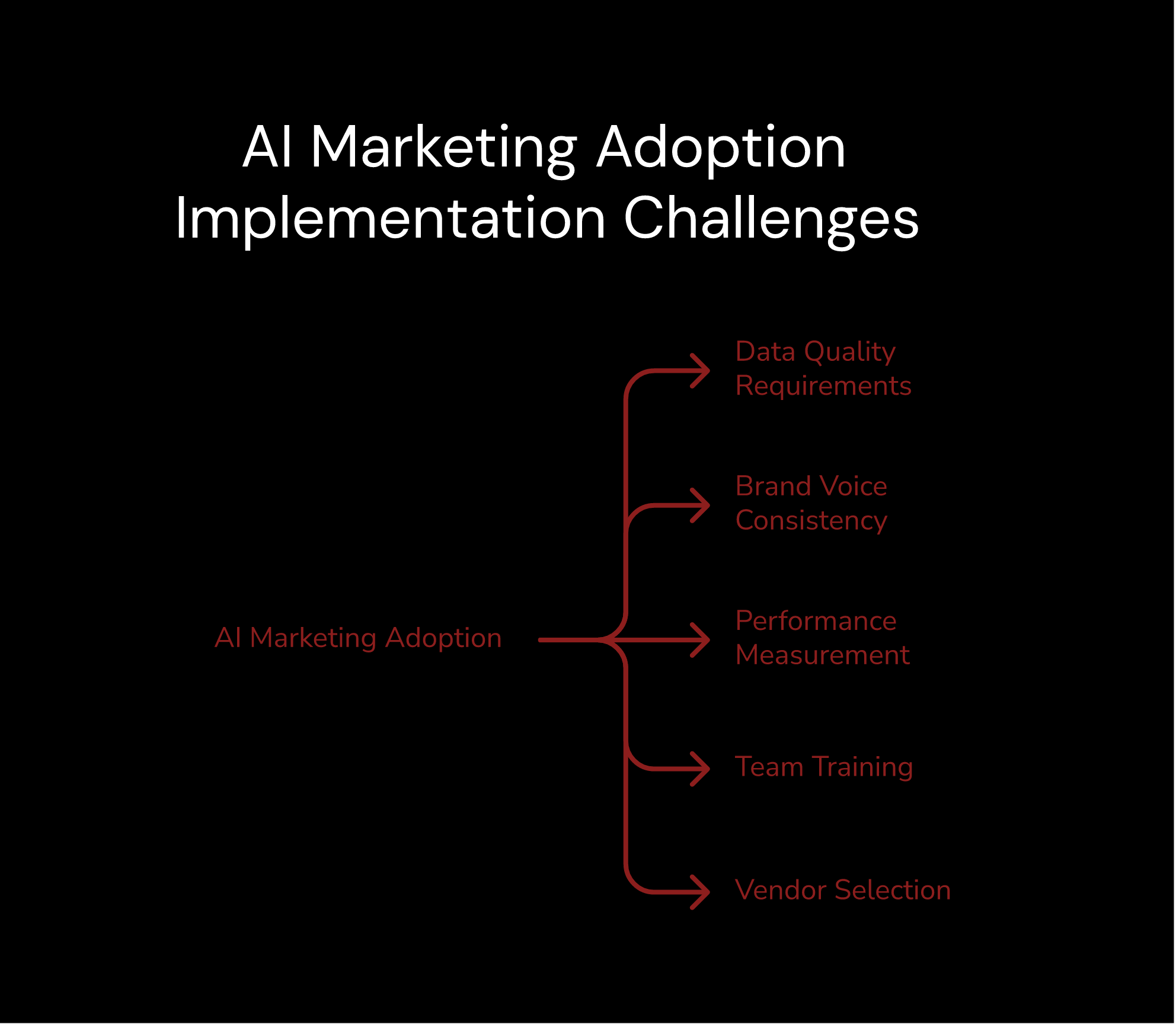
The primary obstacles to AI marketing adoption aren't technical limitations but organizational change management and workflow integration challenges. Marketing teams must adapt existing processes while maintaining campaign quality and brand consistency during the transition period.
- Data Quality Requirements - AI systems need clean, structured input data to produce reliable outputs
- Brand Voice Consistency - Training AI models to maintain specific tone and messaging standards across all content types
- Performance Measurement - Establishing metrics that accurately capture AI-generated content effectiveness compared to manual creation
- Team Training - Developing internal capabilities to manage and optimize AI marketing systems effectively
- Vendor Selection - Evaluating AI marketing platforms based on long-term viability rather than current feature sets
We recommend against rushing AI implementation without establishing clear success metrics and rollback procedures. The most successful deployments start with specific use cases and expand gradually based on measured results rather than attempting comprehensive automation from day one.
Frequently Asked Questions
How does AI-generated creative maintain brand consistency across different campaigns?
AI systems use brand guidelines as training parameters, ensuring consistent tone, messaging, and visual elements. Advanced implementations include brand voice models that analyze existing content to replicate specific communication styles while adapting to different audiences and contexts.
What are the main GDPR considerations for AI marketing automation in the DACH region?
GDPR compliance requires transparent data processing, user consent mechanisms, and the right to explanation for automated decisions. AI marketing systems must document their decision processes and provide opt-out options for personalized content generation while maintaining audit trails for regulatory review.
Can small marketing teams effectively implement AI-generated creative solutions?
Small teams can achieve significant results with focused AI implementation starting with content generation and email automation. The key lies in selecting tools that integrate with existing workflows rather than requiring complete process overhauls, allowing gradual capability expansion as the team develops AI management expertise.
Ready to put this into practice? See our build: Newsletter-Automatisierung mit n8n + SendGrid: Blueprint.
Conclusion
AI generated creative B2B advertising represents a practical evolution in marketing operations rather than a revolutionary replacement of human creativity. Successful implementations tend to focus on multiplying human capabilities rather than eliminating human involvement in strategic decisions.
For DACH enterprises, the path forward requires balancing AI capabilities with regulatory compliance and data sovereignty requirements. The companies achieving measurable results prioritize reliable, owned automation systems over feature-rich platforms that introduce operational dependencies and compliance uncertainties.
Last updated: August 2026
Blck Alpaca is a Vienna-based AI marketing automation agency specializing in data-driven marketing, custom AI agents, and enterprise workflow automation for businesses in the DACH region.
Opens the chat with a prepared prompt.
Related Articles
Discover more insights from our blog


Never miss an insight
Subscribe to our newsletter and get AI & marketing trends delivered to your inbox.