AI Marketing Automation 2026: Decoding Hyper-Personalization
 Sebastian Karall
Data fragmentation kills personalization at scale. Marketing teams across the DACH region battle siloed customer data spread across CRMs, email platforms, analytics tools, and social channels, making true one-to-one marketing nearly impossible. Traditional Marketing Automation Tools patch symptoms without addressing the root cause.
Agentic AI Marketing changes this dynamic completely. It creates unified data infrastructure that connects fragmented touchpoints into coherent customer journeys, enabling genuine hyper-personalization while maintaining data sovereignty under GDPR ↗.
Definition: Agentic AI in Marketing
Agentic AI refers to autonomous artificial intelligence systems that can independently execute marketing tasks, make data-driven decisions, and adapt strategies in real-time without constant human oversight. Unlike traditional rule-based automation, agentic AI learns from customer behavior patterns and optimizes campaigns continuously. These systems handle complex data integration, personalization at scale, and cross-channel orchestration while maintaining compliance with data protection ↗ regulations.
The Data Fragmentation Problem in Modern Marketing
Every customer touchpoint generates valuable behavioral data, yet most companies struggle to connect these signals into actionable insights. A typical DACH enterprise maintains customer data across HubSpot, Salesforce, Google Analytics, social media platforms, and email Marketing Toolseach system operating in complete isolation.
This fragmentation creates massive blind spots in customer understanding. Marketing teams launch campaigns based on incomplete data, missing critical intent signals that occur across multiple channels. The result? Generic messaging that feels impersonal despite sophisticated automation techniques. You're essentially flying blind when half your customer data sits locked in separate silos.
"The cost of data fragmentation isn't just inefficient campaigns, it's the opportunity cost of every missed personalization moment."
Traditional marketing automation tools address symptoms, not causes. They excel at email sequences and lead scoring within their own ecosystems but fail to unify customer behavior across platforms. This limitation becomes particularly challenging for DACH companies attempting sophisticated personalization while managing GDPR Compliance.
How Agentic AI Creates Unified Data Infrastructure
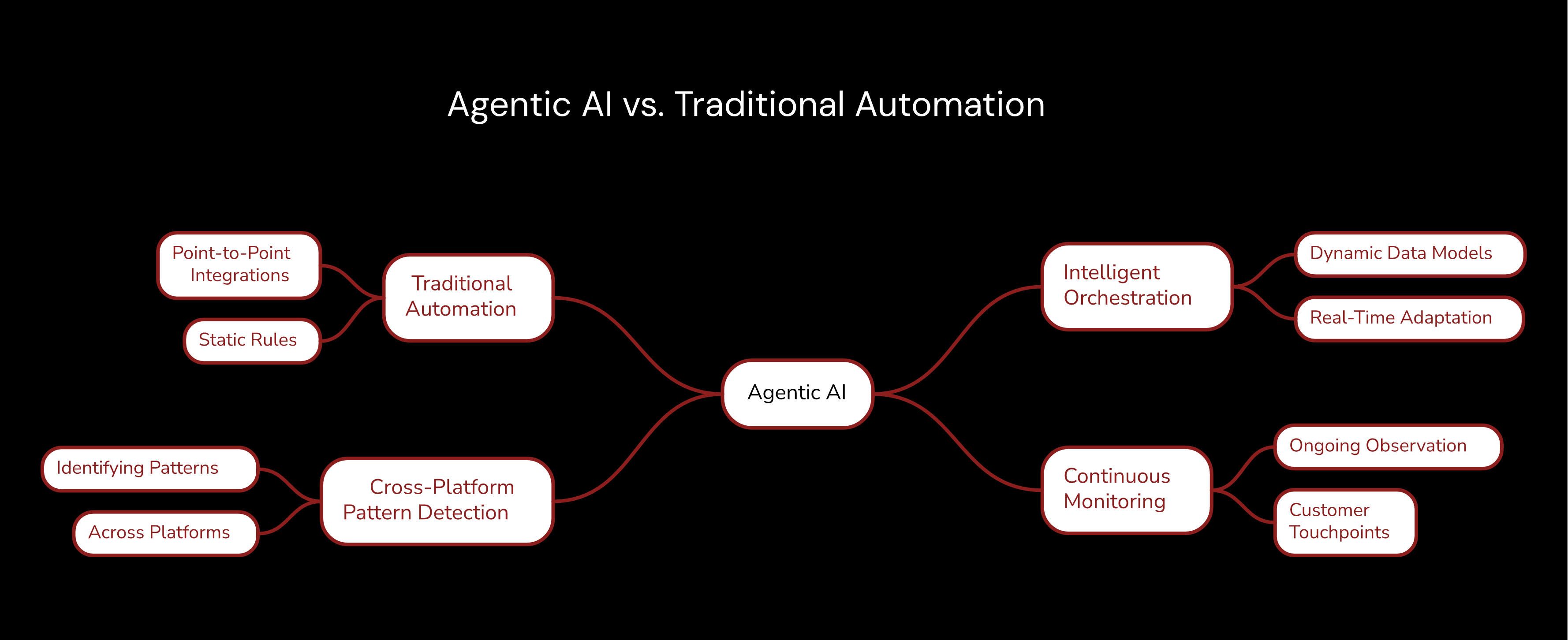
Agentic AI solves fragmentation through intelligent data orchestration. Unlike traditional point-to-point integrations, AI Agents create dynamic data models that adapt to changing customer behaviors and new data sources in real-time. Think of it as having a smart conductor orchestrating your entire data symphony instead of separate musicians playing different songs.
In our n8n ↗ automation pipelines, we deploy AI agents that continuously monitor customer interactions across all touchpoints. These agents identify behavioral patterns that span multiple platforms, a LinkedIn engagement followed by website visits, then email interactions. The AI connects these signals into unified customer profiles without manual mapping rules.
Approach | Traditional Automation | Agentic AI |
|---|---|---|
Data Integration | Static API connections | Dynamic pattern recognition |
Customer Understanding | Platform-specific views | Unified behavioral models |
Personalization Logic | Rule-based segments | Real-time intent detection |
Channel Coordination | Manual campaign sync | Autonomous orchestration |
Data Compliance | Per-platform settings | Centralized governance |
This unified approach enables true intent-based marketing. AI agents detect buying signals across channels and trigger coordinated responses, adjusting website content, email messaging, and social media targeting simultaneously based on individual customer behavior patterns. No more guessing what customers want based on incomplete information.
Implementing Scalable One-to-One Personalization
Scale and personalization traditionally conflict with each other. Manual personalization doesn't scale; mass automation isn't personal. Agentic AI resolves this tension through intelligent content orchestration and dynamic customer journey mapping. It's the difference between hiring a thousand personal assistants and training one brilliant system that never sleeps.
The key lies in moving beyond demographic segments to behavioral micro-moments. AI agents identify specific intent patterns, a prospect researching competitive solutions, an existing customer showing expansion signals, or a churning account requiring retention intervention. Each pattern triggers customized content across all channels.
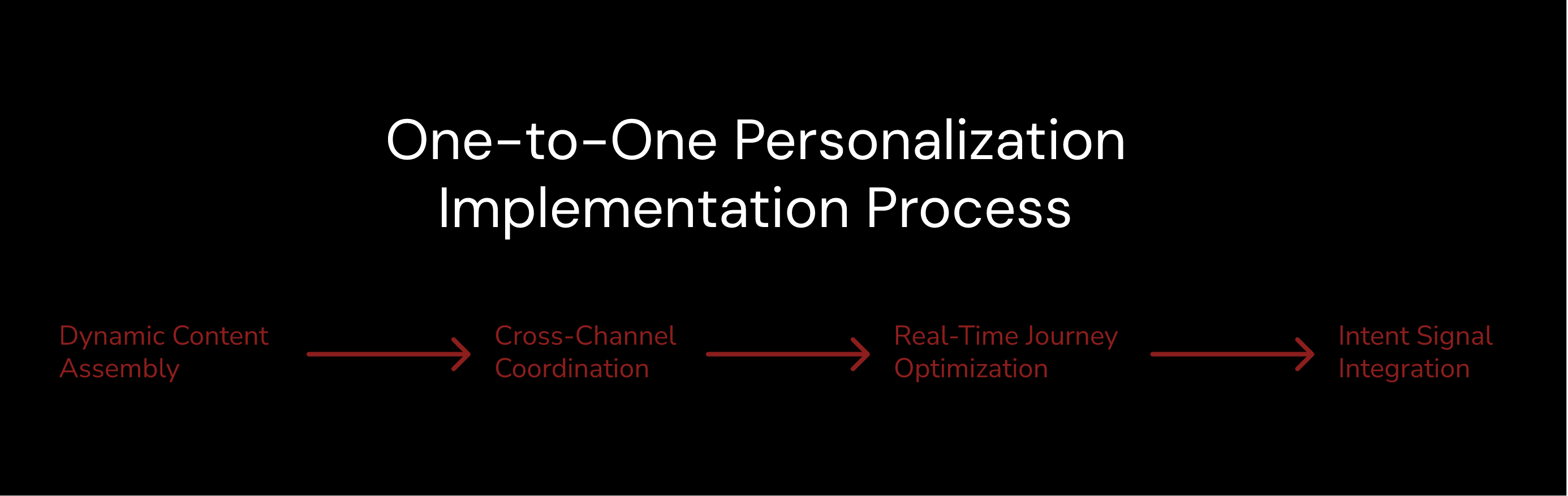
- Dynamic Content AssemblyAI agents combine content modules based on individual customer context, creating unique messaging without manual content creation
- Cross-Channel Message CoordinationEnsuring consistent personalization across email, web, social, and sales touchpoints through unified customer models
- Real-Time Journey OptimizationAI agents adjust customer paths based on engagement patterns, removing friction points and accelerating conversion
- Intent Signal IntegrationConnecting behavioral data from multiple sources to predict customer needs before they explicitly express them
We avoid the common trap of over-personalization that creeps out customers. Our approach focuses on relevance rather than intimacy, providing valuable content at the right moment without appearing invasive. This balance proves particularly important for DACH markets where privacy expectations remain high.
DACH Market: Data Sovereignty and Compliance Integration
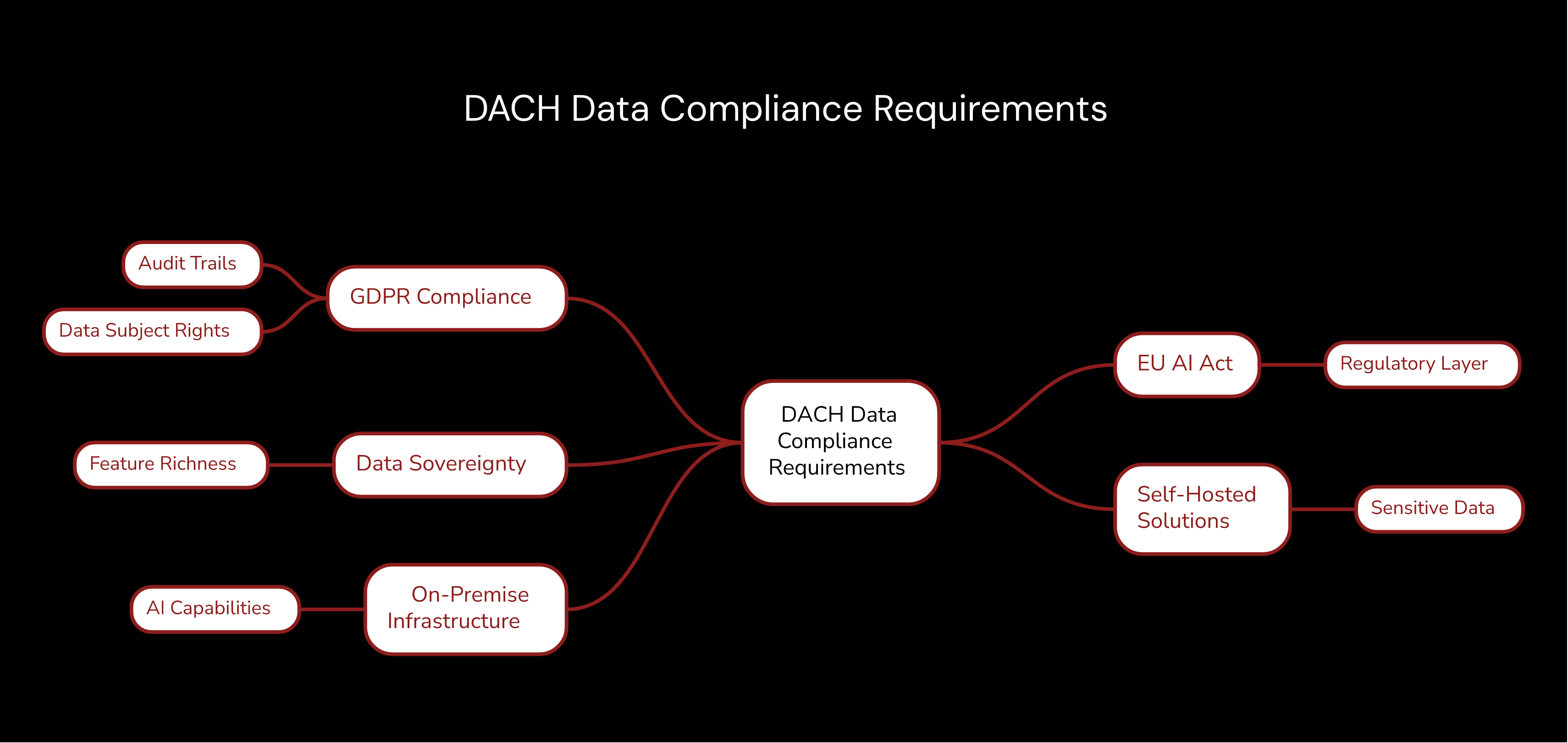
GDPR Compliance ↗ becomes more complex with unified data infrastructure, not simpler. Agentic AI systems must maintain audit trails, respect data subject rights, and ensure lawful processing basis across all integrated platforms. The upcoming EU AI Act ↗ adds another layer of regulatory requirements that companies can't ignore.
For DACH companies, data sovereignty trumps feature richness every time. We recommend self-hosted solutions over SaaS platforms when handling sensitive customer data. Our n8n implementations keep data within company infrastructure while enabling sophisticated AI capabilities through locally deployed models. No data leaves your servers, period.
Key compliance considerations include data minimization principles, AI agents should only process data necessary for specific marketing objectives. The temptation to collect everything because "AI can use it" conflicts with GDPR's purpose limitation principle. Smart implementation focuses on quality over quantity, always.
The EU AI Act's risk classification system may categorize some marketing AI as high-risk, particularly systems making significant decisions about customer treatment. DACH companies should implement transparency measures and human oversight capabilities before regulations fully take effect.
Frequently Asked Questions
How long does it take to implement unified AI marketing infrastructure?
Implementation timelines vary significantly based on existing data complexity and integration requirements. Most DACH companies achieve basic unification within 2-3 months, with advanced personalization capabilities following in months 4-6. The key success factor? Start with high-value data sources rather than attempting comprehensive integration immediately. You'll see results faster and build momentum for the full rollout.
What are the total costs compared to traditional marketing automation?
Initial setup costs run higher due to integration complexity, but operational costs typically decrease over time. Traditional platforms charge per-contact fees that scale exponentially; unified AI infrastructure scales more efficiently. DACH companies often see cost parity within 12-18 months, with significant savings thereafter as customer databases grow. The math gets better every month.
How does unified data infrastructure affect GDPR compliance?
Unified infrastructure can improve GDPR compliance through centralized data governance and automated consent management. However, it requires careful implementation to avoid creating new compliance risks. The key? Maintaining clear data lineage and ensuring all processing activities have valid lawful bases under GDPR Article 6. Done right, it simplifies compliance rather than complicating it.
Conclusion
Data fragmentation represents the single biggest barrier to effective one-to-one marketing in 2026. Traditional marketing automation tools create sophisticated workflows within silos while missing the cross-platform behavioral patterns that drive true personalization. Agentic AI solves this fundamental problem through intelligent data orchestration and real-time customer understanding.
For DACH companies, the path forward requires balancing innovation with compliance. Self-hosted solutions and careful data governance enable sophisticated AI marketing while maintaining the data sovereignty that customers and regulators expect. The companies that solve data fragmentation first will dominate personalized marketing in their markets.
Last updated: August 2026
Blck Alpaca is a Vienna-based AI marketing automation agency specializing in data-driven marketing, custom AI agents, and enterprise workflow automation for businesses in the DACH region.
Opens the chat with a prepared prompt.
Related Articles
Discover more insights from our blog


Never miss an insight
Subscribe to our newsletter and get AI & marketing trends delivered to your inbox.