B2B Content Strategie 2026: Optimiere für AI-Suche
 Lucas Blochberger
Opens the chat with a prepared prompt.

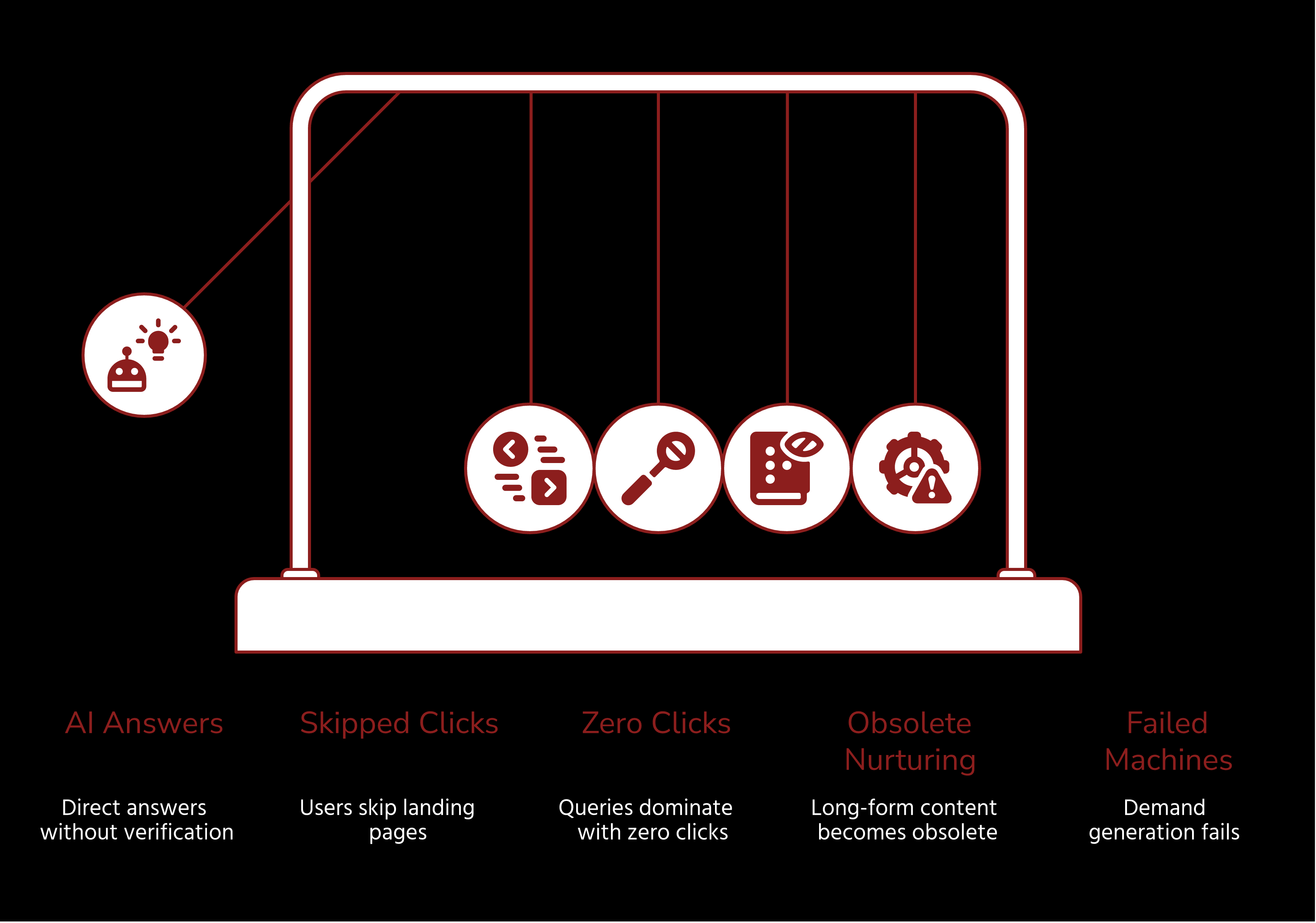
Traditional B2B content strategy is cracking under pressure. AI Search engines now deliver complete answers without bothering to send users to your website. Your meticulously crafted blog posts pull in traffic but convert nobody. Meanwhile, your demand generation playbook churns out impressive vanity metrics while qualified leads walk straight into the arms of competitors who saw the writing on the wall and adapted faster.
This briefing maps out a three-step strategic framework that puts B2B marketers ahead of the search disruption barreling toward us. We've built this framework from patterns emerging across DACH enterprises and from running our own n8n automation pipelines.
Definition: Answer Engine Optimization (AEO)
Answer Engine Optimization restructures content to feed AI search engines that serve up direct answers instead of traditional link lists. While SEO chases ranking positions, AEO focuses on becoming the go-to source that AI models quote when answering user questions. This demands fundamental shifts in content structure, semantic markup, and how you distribute your expertise.
The Collapse of Traditional Search Funnels
B2B marketers constructed entire demand generation machines around Google's traditional search results. Users clicked through to landing pages, absorbed long-form content, and entered carefully designed nurture sequences. This comfortable model is dissolving faster than ice cream on hot asphalt.
"The real disruption isn't that AI answers questions, it's that users stop clicking through to verify those answers."
Zero-click search increasingly shapes B2B buying research (Semrush zero-clicks study ↗). When a procurement manager asks "What's the difference between n8n ↗ and Zapier ↗ for enterprise compliance?", ChatGPT or Claude delivers a thorough comparison without routing them to your painstakingly optimized comparison page. Your content shaped the AI's knowledge, but you get zero attribution, no traffic, and no lead capture.
Step One: Audit Your Content for AI Visibility
Before you overhaul your B2B content strategy, figure out how AI Systems currently interpret your existing materials. This audit exposes the gaps between what you publish and what AI engines actually extract as reliable information.
Semantic Structure Assessment
AI engines prefer content with crystal-clear information hierarchy. Examine your product pages, case studies, and thought leadership pieces for structured data markup, consistent headings, and explicit question-answer pairs. Content written for human readers often lacks the semantic precision that AI systems need for accurate extraction.
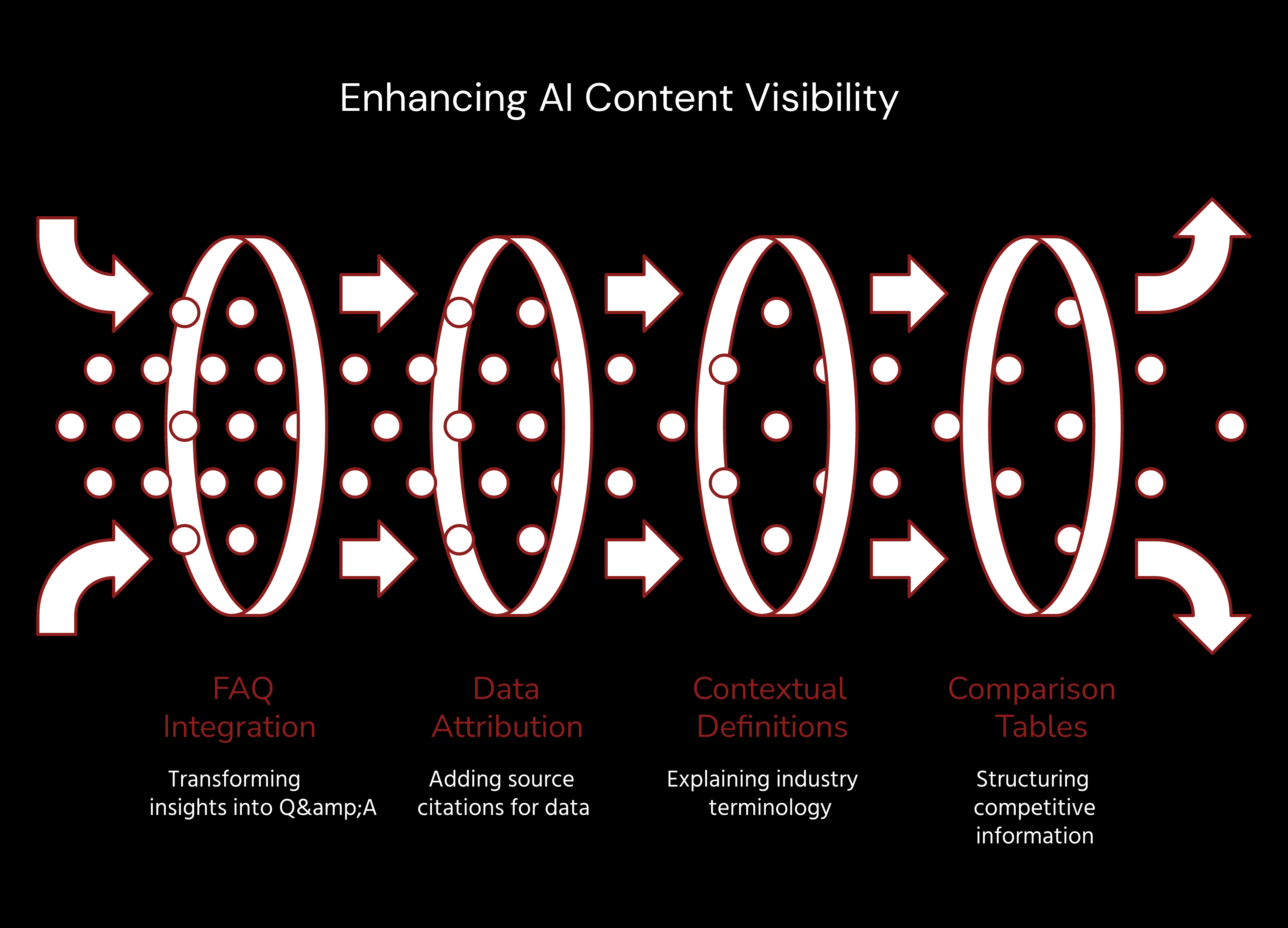
- FAQ IntegrationTransform buried insights into explicit Q&A formats
- Data AttributionAdd clear source citations for statistics and claims
- Contextual DefinitionsInclude industry terminology explanations within content
- Comparison TablesStructure competitive information in machine-readable formats
Authority Signal Analysis
AI systems appear to calculate authority differently than traditional search algorithms: citation patterns, cross-referencing frequency, and consistency across multiple sources seem to outweigh classic domain authority. Analyze which of your insights show up in AI responses to industry queries, and spot content gaps where competitors dominate the AI narrative.
Step Two: Implement Answer-First Content Architecture
Transform your content production process to serve both human readers and AI extraction systems. This requires fundamental changes to information architecture, not cosmetic formatting tweaks.
Primary Answer Positioning
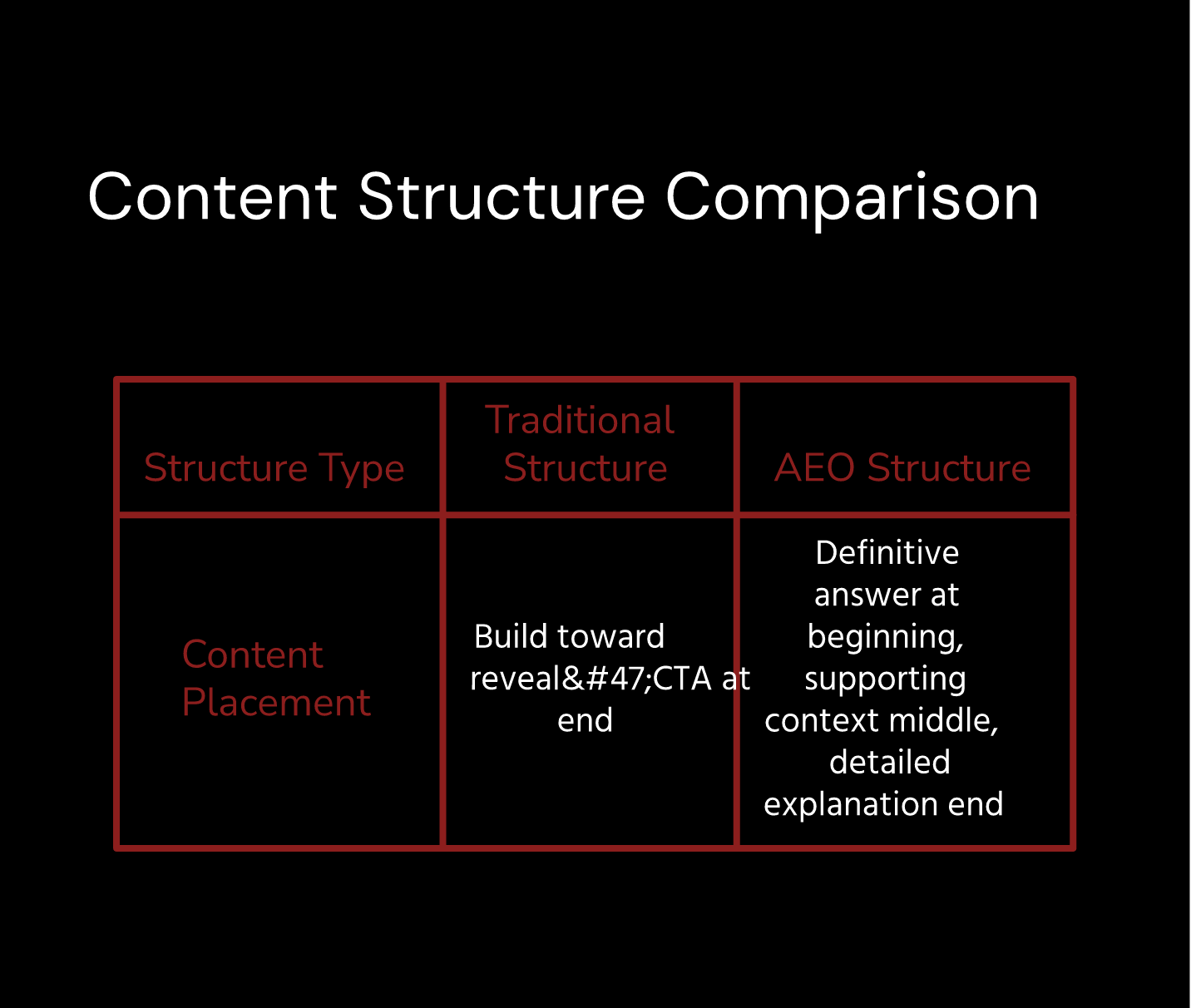
Put definitive answers at the beginning of each content piece, followed by supporting context and detailed explanation. Our working assumption from running our own answer-first pipelines: AI engines lift answers from opening paragraphs far more often than from buried conclusions. This flips the traditional marketing content structure that builds toward a reveal or call-to-action on its head.
Traditional Structure | AEO Structure | AI Extraction Benefit |
|---|---|---|
Problem → Solution → Benefits | Answer → Context → Validation | Direct answer availability |
Narrative buildup | Modular information blocks | Selective content extraction |
Conversion-focused CTA | Attribution-optimized sourcing | Proper citation likelihood |
Keyword density focus | Semantic relationship mapping | Context-aware understanding |
We structure our technical documentation and market analysis using this approach. When AI systems extract information about Workflow Automation best practices, they find complete, attributable answers rather than promotional content that requires interpretation.
Distributed Authority Building
Develop pillar content that establishes your position on core industry topics, then create supporting materials that reference and expand these foundational pieces. When AI engines encounter multiple consistent sources from your organization, they tend to weight your information more heavily in synthesis.
Step Three: Build AI-Native Distribution Systems
Content distribution must evolve beyond social media scheduling and email newsletters. AI systems discover and process information through specific pathways that differ from traditional content Marketing Channels.
Structured Syndication Networks
Establish content distribution networks that amplify your information across platforms where AI systems actively crawl for training data and real-time responses. This includes technical forums, industry databases, and collaborative knowledge platforms.
Real-Time Response Optimization
Monitor how AI systems currently answer queries related to your expertise, then create content specifically designed to improve those responses. This requires ongoing analysis of AI-generated answers and strategic content creation to fill identified gaps.
"The goal isn't to game AI systems, it's to ensure accurate information about your solutions reaches decision-makers through their preferred research methods."
Attribution Optimization Strategies
Design content formats that maintain source attribution when extracted and recombined by AI systems. This includes consistent organizational branding within informational content, clear authorship indicators, and strategic internal linking that helps AI systems understand content relationships.
DACH Market Compliance Considerations
B2B content strategy evolution in the DACH Market must account for data sovereignty requirements and evolving AI regulation frameworks. The EU AI Act may impact how organizations can optimize for AI search systems, particularly regarding transparency and algorithmic influence.
GDPR Compliance extends to content designed for AI consumption. When creating structured data and attribution systems, ensure that personal data handling meets regulatory requirements, especially for content that may be processed by third-party AI systems outside EU jurisdiction.
DACH enterprises often prioritize data sovereignty over optimization convenience. We recommend self-hosted analytics and content management systems that provide optimization insights without external data exposure. This approach maintains compliance while enabling strategic content evolution.
Frequently Asked Questions
How quickly should B2B organizations implement this framework?
Start with the content audit immediately, understanding current AI visibility requires minimal resources but provides strategic clarity that pays dividends fast. Roll out answer-first architecture gradually across new content production, then retrofit high-performing existing materials. Full distribution system optimization can stretch over 6-12 months depending on organizational complexity and how many sacred cows you need to navigate around.
What metrics should replace traditional SEO measurements?
Monitor AI mention frequency for your key topics, brand attribution rates in AI responses, and qualified lead quality rather than pure traffic volume. Track how often your content appears as source material in AI-generated industry analyses, and measure conversion rates from users who arrive with higher intent after AI-mediated research. These metrics tell you whether you're building real influence or just chasing vanity numbers.
Do we need new tools or can existing marketing tech adapt?
Most existing content management and analytics platforms can support AEO strategies with configuration changes rather than replacement. However, consider specialized tools for AI response monitoring and structured content optimization. We recommend starting with existing systems enhanced by targeted AI monitoring tools rather than complete platform overhauls that drain budgets and patience.
Conclusion
B2B content strategy stands at an inflection point. Organizations that adapt their approach to serve both human audiences and AI intermediaries will maintain competitive advantage as search behavior evolves. Those that continue optimizing for traditional metrics while ignoring AI-mediated research patterns risk becoming invisible to their target buyers.
The three-step framework, content audit, answer-first architecture, and AI-native distribution, provides a practical roadmap for this transition. Success requires commitment to long-term strategic thinking over short-term traffic optimization, but early adopters will establish authority in AI-mediated markets while competitors struggle with declining organic performance.
Last updated: August 2026
Blck Alpaca is a Vienna-based AI marketing automation agency specializing in data-driven marketing, custom AI agents, and enterprise workflow automation for businesses in the DACH region.
Related Articles
Discover more insights from our blog


Never miss an insight
Subscribe to our newsletter and get AI & marketing trends delivered to your inbox.