AI Prompt Engineering Techniques for 2026, Improve Performance
 Sebastian Karall
The performance gap between amateur and expert AI prompting has become stark in 2026. Marketing teams scramble to implement generative AI tools like ChatGP and Claude, yet most enterprises hit walls: inconsistent outputs, abandoned projects, and AI performance that disappoints rather than delivers through effective prompt engineering.
The difference between high-quality prompts and amateur attempts isn't luck or intuition. Understanding these structural gaps transforms AI marketing automation from unreliable experiment to reliable competitive edge through strategic generative AI prompt techniques.
Definition: AI Prompt Engineering
AI prompt engineering is the systematic design of input instructions that guide generative AI models toward specific, high-quality outputs. It combines context setting, role assignment, output formatting, and constraint definition to create reproducible results from language models like GPT-4, Claude, or Gemini.
The Measurable Cost of Poor Prompt Engineering
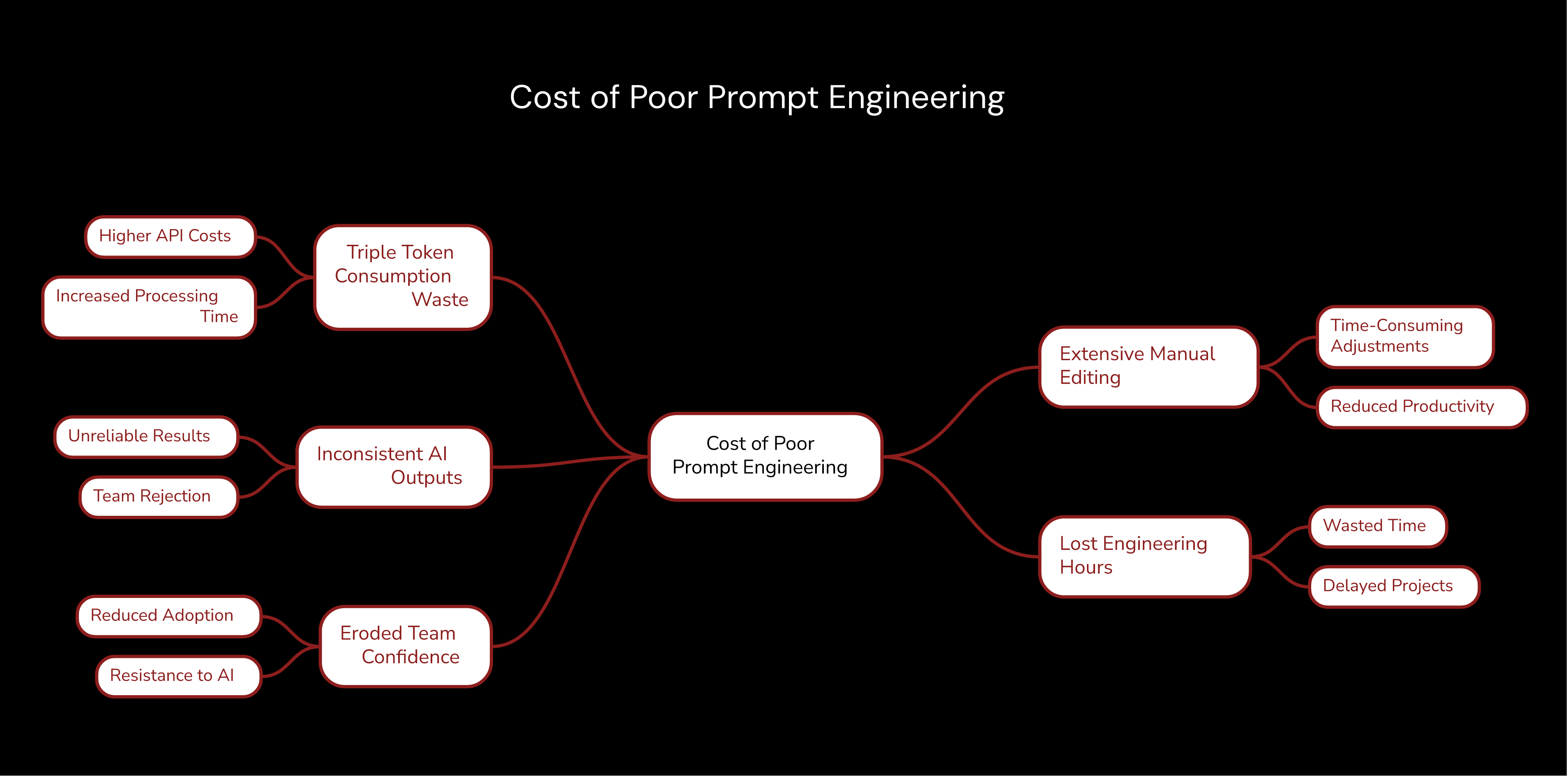
Amateur prompts create business chaos. Generic requests like "write a blog post about our product" generate content that demands extensive manual editing, completely defeating automation goals by creating avoidable generative AI prompt mistakes.
"The real cost of automation isn't the platform fee but the engineering hours wasted on fixing inconsistent AI outputs."
Our n8n ? automation pipelines reveal that poorly structured prompts burn far more processing tokens while producing outputs marketing teams routinely trash. This compounds quickly: teams lose faith in AI tools, return to manual processes, and decide AI marketing automation "doesn't work for our business."
DACH Enterprises face additional complexity with data sovereignty under GDPR. Poorly designed prompts require multiple iterations and corrections, creating unnecessary data processing cycles that complicate compliance documentation and audit trails.
Structural Techniques That Distinguish Expert Prompting
Persona Assignment and Role Definition
Expert prompts start with precise role assignment that cuts deeper than surface job titles. Rather than "act as a marketer," effective prompts define specific expertise, experience level, and decision-making authority relevant to marketing automation strategies.
Compare these approaches: Amateur prompts request "write marketing copy." Expert prompts specify "You are a B2B SaaS marketing director with 8 years experience in the DACH Market, focused on mid-market software procurement decisions. Your audience consists of IT managers at 50-500 employee companies who evaluate automation tools under GDPR compliance requirements."
In our Automation Workflows, persona specificity drives consistency across campaign variations. The AI maintains voice, tone, and technical depth when it understands exactly whose expertise to emulate, enhancing AI prompting for marketers.
Constraint Architecture and Output Formatting
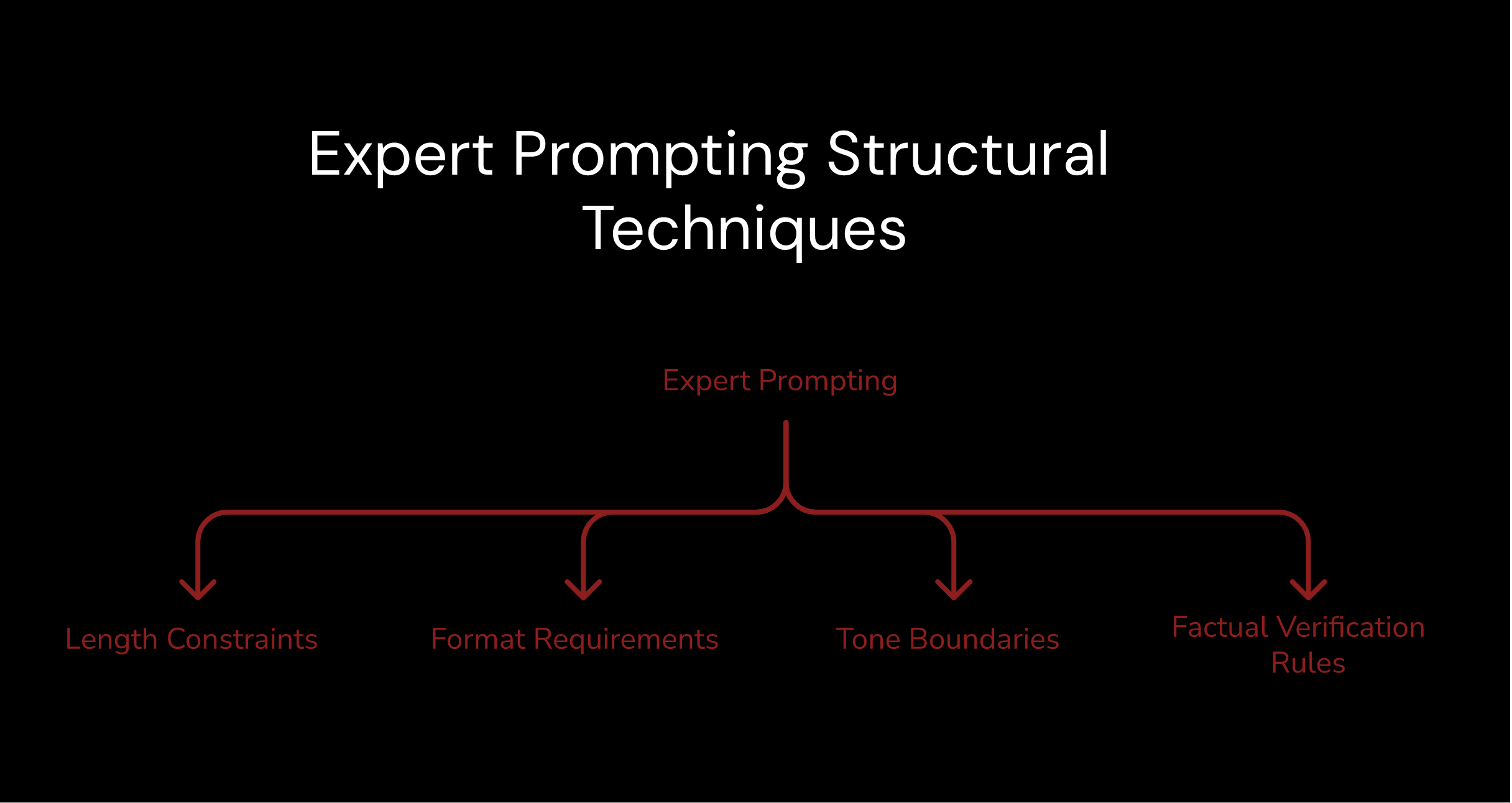
High-performance prompts employ constraint architecture: explicit rules that prevent unwanted behaviors before they occur. This encompasses output formatting requirements, prohibited content types, and response structure mandates.
- Length constraints, specify exact word counts or character limits for different content sections
- Format requirements, define HTML structure, heading hierarchy, or CTA placement
- Tone boundaries, explicitly prohibit salesy language, jargon, or inappropriate emotional registers
- Factual verification rules, require source citations or flag claims that need human verification
These constraints eliminate the iterative correction cycles that plague amateur implementations. Instead of fixing AI outputs after generation, expert prompts prevent problematic outputs through precise prompt structuring techniques.
Generational Performance Disparities in AI Models
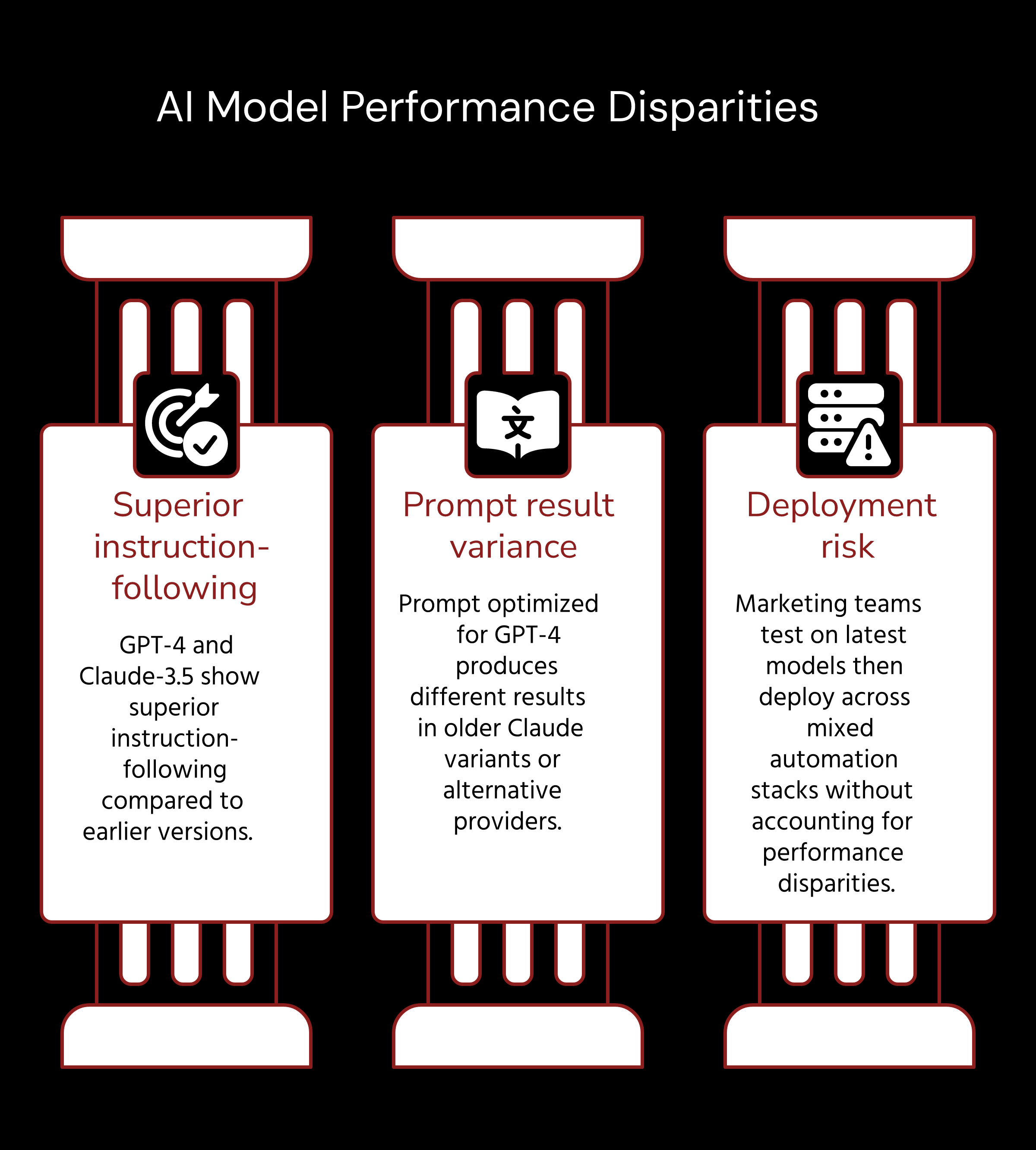
Different AI models respond to prompt engineering techniques with varying sensitivity. GPT-4 and Claude-3.5 show superior instruction-following compared to earlier generations, but this creates false confidence.
Marketing teams test prompts on the latest models, then deploy them across different AI tools in their automation stack. A prompt optimized for GPT-4 may produce dramatically different results when processed by older model versions or alternative providers like Anthropic ?'s earlier Claude variants.
We design our n8n automations with model-agnostic prompting techniques that maintain performance consistency across different AI providers. This includes redundant instruction phrasing, explicit example provision, and fallback formatting rules that function regardless of the underlying language model.
DACH Market Implementation Considerations
German-speaking markets present unique prompt engineering challenges that most international AI marketing guidance ignores. Cultural communication patterns, Regulatory Compliance requirements, and technical language preferences demand localized prompt architectures.
GDPR ? compliance extends beyond data processing into prompt design itself. Effective prompts for DACH markets must explicitly instruct AI models to avoid generating content that could trigger data collection obligations, create implied consent scenarios, or suggest non-compliant tracking implementations.
Austrian and Swiss enterprises particularly value technical precision over marketing enthusiasm. Prompts that produce effective content for US markets often generate overly promotional outputs that DACH prospects reject as unprofessional. Cultural calibration becomes part of the prompt engineering technical specification.
Frequently Asked Questions
How do you measure prompt engineering quality objectively?
Quality measurement combines output consistency tests, task completion rates, and editing time requirements. Track how often generated content meets publishing standards without human revision, and measure token efficiency relative to output quality.
Can prompt engineering techniques work across different AI marketing tools?
Well-designed prompts transfer between AI models with minimal modification. Focus on constraint architecture and explicit instruction phrasing rather than model-specific optimizations. Test across your entire automation tool stack before deployment.
What's the biggest mistake DACH enterprises make with AI prompt engineering?
Copying English-language prompt templates without cultural and regulatory adaptation. GDPR ? compliance requirements and DACH communication preferences need explicit integration into prompt structure, not post-generation editing.
Ready to put this into practice? See our build: Airtable Alternative: NocoDB Self-Hosted for DSGVO Compliance.
Conclusion
The performance gap between amateur and expert AI prompting reflects systematic structural differences, not creative talent or technical complexity. Persona assignment, constraint architecture, and cultural calibration create the foundation for consistent, high-quality AI marketing automation.
For DACH enterprises, prompt engineering success requires balancing international AI capabilities with local market requirements. The teams that master these structural techniques in 2026 will establish sustainable competitive advantages in AI-driven marketing operations while their competitors struggle with inconsistent, unreliable automation attempts.
Last updated: September 2026
Blck Alpaca is a Vienna-based AI marketing automation agency specializing in data-driven marketing, custom AI agents, and enterprise workflow automation for businesses in the DACH region.
Opens the chat with a prepared prompt.
Related Articles
Discover more insights from our blog


Never miss an insight
Subscribe to our newsletter and get AI & marketing trends delivered to your inbox.