Enterprise AI Systems: Der Weg zur Effizienz 2026
 Sebastian Karall
Opens the chat with a prepared prompt.

Enterprise AI systems have hit a crucial turning point. Most organizations still view artificial intelligence as productivity software, just another tool in their digital arsenal. But the companies racing ahead have grasped something fundamental: competitive advantage flows from organizational redesign, not technology access alone.
This article explores why moving from individual AI tools to Enterprise AI Infrastructure demands a complete rethinking of workflows, decision-making structures, and operational design throughout your organization.
Definition: Enterprise AI Systems
Enterprise AI systems are integrated artificial intelligence platforms that operate across multiple business functions simultaneously, automating decision-making processes and orchestrating workflows without constant human intervention. Unlike standalone AI tools, these systems function as organizational infrastructure, embedded into core Business Operations and designed to scale with company growth.
The Shift from Individual Tools to Organizational Infrastructure
Most DACH companies tackle AI adoption through familiar patterns: buy software, train users, measure productivity gains. This tool-centric thinking misses the bigger opportunity for AI organizational transformation.
Real transformation happens when AI becomes infrastructure. Instead of employees using AI applications, the organization itself runs through AI-enabled processes. Marketing campaigns launch automatically based on performance triggers. Customer service responses adapt in real-time to sentiment analysis. Supply chain adjustments occur before human operators spot the need.
"The companies winning with AI aren't using better tools, they're designing better organizations around AI capabilities."
Our own automation pipelines are built on this distinction. "AI writing assistance" bolted onto an existing process yields efficiency gains at best. An autonomous content generation workflow redesigns how the marketing operation itself functions, and that approach delivers far better results because it eliminates bottlenecks instead of optimizing around them.
Why Multi-Agent AI Systems Create Competitive Advantage
Single-purpose AI tools create incremental improvements. Multi-agent AI systems create structural advantages by coordinating activities across departments and decision layers simultaneously.
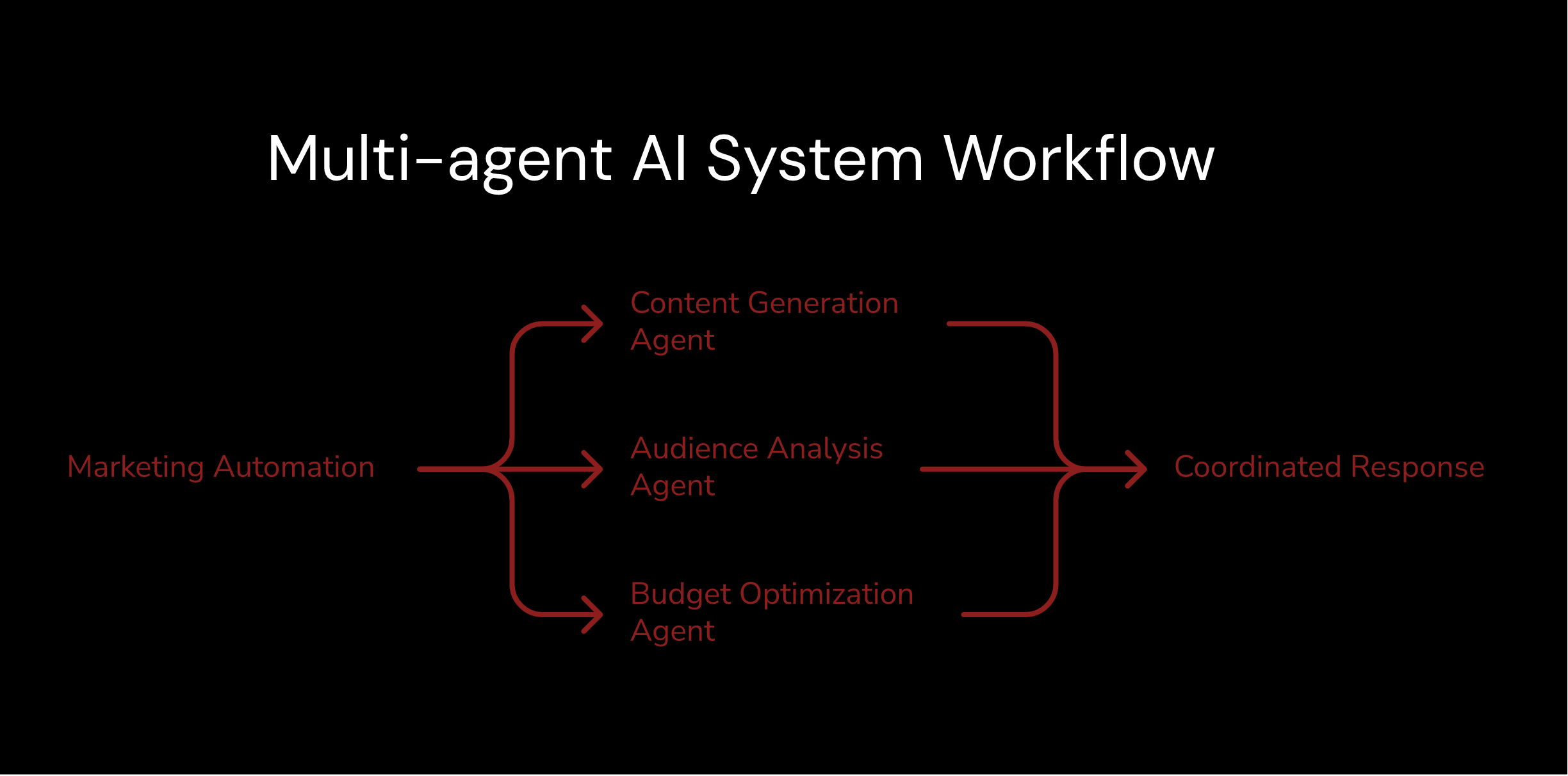
Consider autonomous Agent Orchestration in practice. A marketing automation system detects declining engagement on a campaign. Instead of alerting a human manager, it triggers coordinated responses: the content generation agent develops new messaging variants, the audience analysis agent identifies alternative targeting parameters, and the budget optimization agent reallocates spend toward higher-performing channels. Meanwhile, the performance monitoring agent tracks results and feeds learning back into future decision-making.
This coordination becomes impossible with disconnected AI tools. Each requires human intervention to connect outputs to inputs across systems. The competitive advantage comes from eliminating those human handoffs entirely through more comprehensive AI integration strategies.
Orchestration vs. Integration
Many organizations confuse system integration with agent orchestration. Integration connects different software platforms so data flows between them. Orchestration enables autonomous agents to make decisions and trigger actions across multiple systems without human oversight.
We design our own n8n Automation Workflows with this distinction in mind. Rather than simply moving data between a CRM and an email platform, the orchestration pattern builds decision trees: agents evaluate lead quality, determine appropriate messaging sequences, and adjust outreach timing based on recipient behavior patterns. The human role shifts from executing these decisions to designing the decision logic.
AI Governance in Autonomous Systems
Organizational redesign around AI infrastructure demands new governance frameworks. Traditional approval chains and quality control processes break down when decisions happen faster than human review cycles allow.
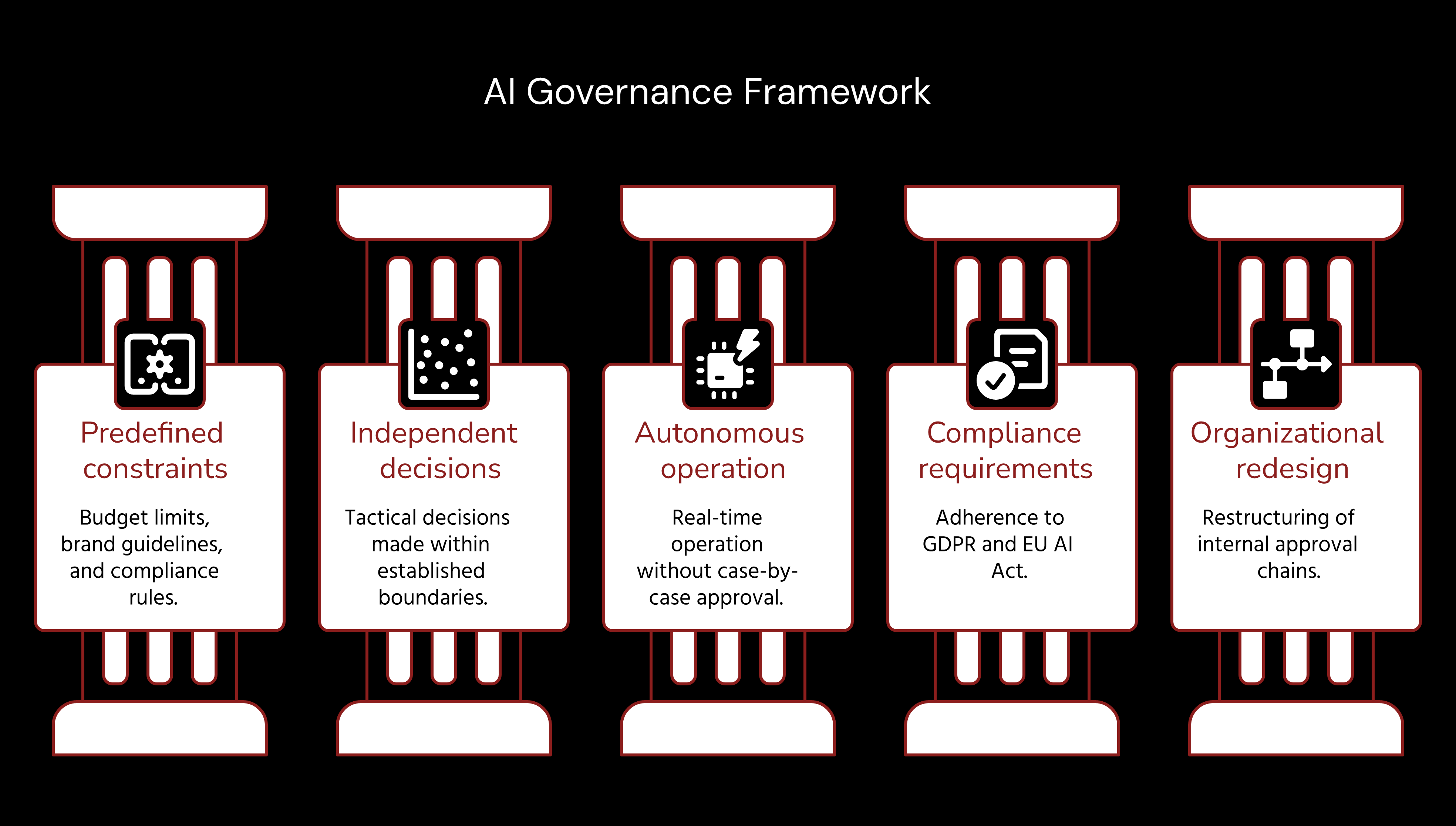
Effective AI governance in autonomous systems operates through predefined constraints rather than case-by-case approvals. Agents operate within defined parameters, budget limits, brand guidelines, compliance requirements, but make tactical decisions independently within those boundaries.
For DACH organizations, this governance challenge intersects with GDPR and EU AI Act requirements. Autonomous agents processing customer data must operate within strict regulatory frameworks. This may require additional oversight mechanisms compared to organizations operating in less regulated markets.
Compliance by Design
Our decision rule for GDPR-compliant automation: embed compliance rules directly into agent decision-making rather than adding compliance as an afterthought. Agents designed with data sovereignty requirements from the beginning operate more reliably than those retrofitted with compliance layers.
AI Adoption Strategy for the DACH Mittelstand
Enterprise AI Transformation strategies designed for Fortune 500 companies rarely translate effectively to the DACH Mittelstand. Smaller organizations need different approaches that account for limited IT resources and more concentrated decision-making authority.
The most promising pattern for the DACH Mittelstand starts with single-function automation that demonstrates clear value before expanding to cross-functional orchestration. A logistics company might begin with automated inventory alerts, then expand to predictive ordering, and eventually implement autonomous supplier negotiations based on market conditions and inventory projections.
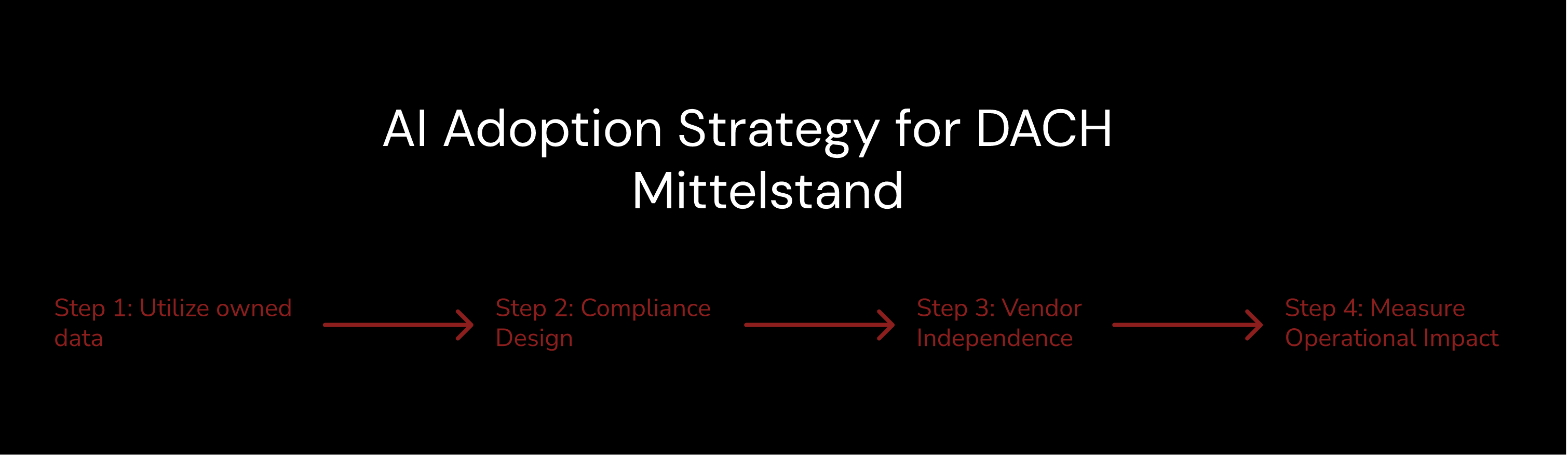
- Start with owned dataBuild initial AI systems around data you control rather than depending on third-party integrations
- Design for compliance firstEmbed GDPR and industry-specific requirements into system architecture from the beginning
- Avoid vendor lock-inChoose platforms that allow migration and customization rather than proprietary closed systems
- Measure operational impactTrack time saved and decision quality rather than just cost reduction
Our take: don't begin AI transformation with customer-facing systems. Internal operational improvements provide better learning opportunities with lower risk exposure. Master the organizational changes required before deploying AI systems that directly impact customer experience.
Frequently Asked Questions
How do you measure ROI on organizational AI transformation?
Focus on operational metrics rather than just cost savings. Measure decision speed, process consistency, and capacity for handling complexity. The goal is organizational capability improvement, not efficiency gains alone.
What's the biggest risk in enterprise AI adoption?
Treating AI transformation as a technology project rather than organizational redesign. Technical implementation is straightforward; changing workflows, decision authorities, and quality control processes requires more careful change management.
Should DACH companies prioritize AI governance or AI adoption speed?
Governance first in regulated industries. The EU AI Act ↗ and GDPR create compliance requirements that are easier to build into systems from the beginning than to retrofit later. Speed without governance creates technical debt and regulatory risk.
Conclusion
The competitive advantage in enterprise AI systems comes from organizational redesign, not technology selection. Companies that continue approaching AI as productivity software will find themselves competing against organizations that have rebuilt their operational infrastructure around autonomous agent capabilities.
For DACH organizations, this transformation requires balancing innovation speed with governance requirements. The most successful implementations start with internal process automation, demonstrate measurable operational improvements, and gradually expand to more complex multi-agent orchestration as organizational capabilities mature.
Last updated: August 2026
Blck Alpaca is a Vienna-based AI marketing automation agency specializing in data-driven marketing, custom AI agents, and enterprise workflow automation for businesses in the DACH region.
Related Articles
Discover more insights from our blog


Never miss an insight
Subscribe to our newsletter and get AI & marketing trends delivered to your inbox.